
Mobile Legends as a Game of Skill, Strategy, and Continuous Learning
Explora Design >> Blog>> Mobile Legends as a Game of Skill, Strategy, and Continuous LearningMobile Legends as a Game of Skill, Strategy, and Continuous Learning
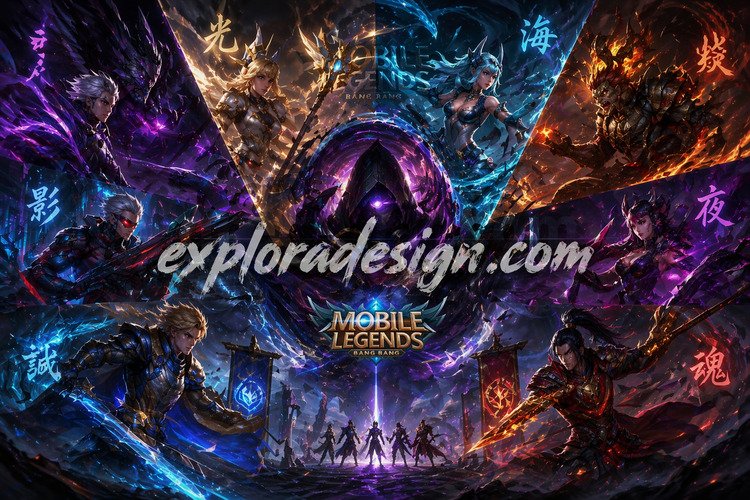
exploradesign.com – The modern gaming industry has seen a major shift toward mobile platforms, and one of the most successful examples of this transformation is Mobile Legends: Bang Bang. The game has grown from a simple multiplayer title on smartphones into a global competitive phenomenon. Across many regions, especially in Southeast Asia, it has become a common part of everyday life for gamers. It is played casually by students after school, competitively by ranked players chasing higher divisions, and professionally in international tournaments watched by millions.
The popularity of Mobile Legends is not only due to its accessibility. Anyone with a smartphone can download it and begin playing within minutes. The controls are intuitive, the matches are relatively short, and the game provides instant excitement. However, what keeps players engaged over time is the depth hidden beneath its simple appearance. Every match becomes a combination of mechanical skill, tactical decision-making, and teamwork.
For someone who is new to the game, the battlefield may seem chaotic. Heroes move quickly, skills flash across the screen, and objectives appear while teammates call for assistance. But for experienced players, this apparent chaos reveals a pattern. The game is built around a structure where every action matters. Choosing when to fight, when to retreat, when to push a tower, or when to secure a neutral objective can determine whether a team wins or loses.
Understanding How Mobile Legends Works at Its Core
A standard match in Mobile Legends takes place on a symmetrical map divided into three main lanes. These lanes connect the two opposing bases and are guarded by towers. To achieve victory, players must destroy the towers in sequence and eventually attack the enemy crystal at the center of the base.
Between these lanes lies the jungle, which contains neutral monsters that provide resources. These monsters grant gold, experience, and special buffs. The jungle is often the source of early advantages because it accelerates hero growth. Controlling the jungle means controlling access to extra resources, which can create a significant lead.
Many new players believe the main objective is to get as many kills as possible. While eliminations are important, they are not the ultimate goal. Kills only create opportunities. The real objective is to destroy structures and control the map. A team with fewer kills can still win if they focus on towers and objectives.
This understanding is one of the first major lessons in Mobile Legends. The game rewards players who think beyond combat and recognize the importance of long-term strategy.
Hero Roles and Team Composition
Mobile Legends includes a large roster of heroes, each belonging to a class that defines their role. These roles are tank, fighter, assassin, mage, marksman, and support. Each one serves a specific purpose within the team.
Tanks are responsible for absorbing damage and initiating fights. Fighters combine durability and offense, often thriving in close-range skirmishes. Assassins are designed to eliminate fragile targets quickly. Mages control battles through magical burst damage and crowd-control skills. Marksmen deal sustained ranged damage and often become the strongest late-game heroes. Supports assist teammates through healing, shielding, or utility effects.
Choosing the right hero is not just about preference. It requires understanding the team’s needs. A balanced team usually performs better than one made up of individually powerful but mismatched heroes.
Experienced players often adjust their role based on the lineup. If the team lacks a tank, someone may choose to fill that gap even if it is not their favorite role. This adaptability is often the mark of a strong player.
The Three Phases of a Match
Every Mobile Legends match unfolds through three major phases: early game, mid game, and late game. Each phase requires a different mindset.
The early game focuses on farming and lane control. Players gather gold and experience while avoiding unnecessary risks. This stage is about building a foundation for later fights.
The mid game begins when players start rotating more frequently and contesting objectives. Team fights become more common, and towers begin to fall. Momentum often shifts during this phase.
The late game is where the stakes become highest. Most heroes have completed their core items, and a single lost fight can end the match. Decision-making becomes more important than ever because death timers are long and objectives like the Lord become decisive.
Understanding these phases allows players to adjust their priorities. A strategy that works early may be dangerous later.
How to Play Better and Improve Consistently
One of the most fundamental skills in Mobile Legends is farming. Farming means collecting gold and experience efficiently by defeating minions, jungle monsters, and objectives.
New players often ignore farming because they are focused on fighting. They chase kills across the map and miss minion waves. This can leave them underpowered, even if they have secured several eliminations.
A player who farms consistently can gain a strong economic advantage. Gold allows heroes to buy items that increase damage, defense, or utility. Experience increases hero levels, unlocking stronger abilities.
The Gold lane and EXP lane are specifically designed to accelerate certain roles. Marksmen often take the Gold lane to scale faster, while fighters use the EXP lane to gain levels quickly.
Strong players understand that good farming creates the foundation for winning fights later.
Rotations and Map Awareness
Once the early game ends, rotations become essential. Rotations involve moving between lanes to create pressure, assist teammates, or secure objectives.
A successful rotation can turn a balanced lane into a winning situation. For example, a mage may clear the middle lane quickly and move to the bottom lane to support an ally, creating a temporary advantage.
Map awareness is critical for this. The mini-map provides constant information about ally and enemy positions. Players who ignore it often walk into ambushes or miss opportunities.
Watching the map allows players to anticipate enemy movements. If multiple enemies are missing, caution is necessary. If several are visible far away, pushing a tower may be safe.
This constant awareness separates advanced players from beginners.
Team Fights and Positioning
Team fights are where the game often reaches its peak intensity. These battles usually occur around major objectives such as the Turtle or Lord. Winning them can create opportunities to secure map control and end the match.
Successful team fights depend heavily on positioning. A marksman who stands too far forward may be eliminated instantly. A tank who engages too early may waste valuable skills before teammates are ready.
Target selection is also crucial. Attacking the wrong enemy can allow dangerous opponents to remain active. Strong teams prioritize key targets such as enemy marksmen or mages.
Patience often wins team fights. Waiting for the right moment to engage is usually more effective than rushing in without preparation.
Constant Change Through Updates
One of the reasons Mobile Legends remains engaging is the regular updates from Moonton. These updates introduce new heroes, rebalance existing ones, and adjust items or mechanics.
This creates a constantly evolving competitive environment. Strategies that dominate one season may become weaker in the next. Players must adapt to stay competitive.
The changing meta keeps the game fresh and encourages experimentation.
Emotional Discipline and Learning from Defeat
Mobile Legends is not only about mechanics but also mental resilience. Ranked matches can create strong emotions. Losing a close game can be frustrating, especially when mistakes come from teammates.
Players who lose control emotionally often make poor decisions. They may overextend, stop cooperating, or focus more on blaming others than improving.
Strong players remain calm. They understand that losses are part of growth. Every defeat reveals mistakes that can be corrected.
Teamwork as the Central Element
Although individual skill matters, teamwork is the foundation of Mobile Legends. No player can control every aspect of a match alone.
A coordinated team can defeat stronger individual opponents by moving together, securing objectives, and supporting each other. Communication through pings or quick messages can be enough to create strong coordination.
The most satisfying victories often come from moments of perfect teamwork. A tank initiates, a mage follows with crowd control, and the marksman finishes the fight. These moments are what make the game memorable.
Conclusion Mobile Legends as a Game of Skill, Strategy, and Continuous Learning
Mobile Legends: Bang Bang is much more than a simple mobile game. It is a competitive environment where players must combine mechanics, strategy, and teamwork to succeed.
Learning how to play well requires understanding the map, hero roles, farming, rotations, and objective control. Beyond that, it also requires adaptability, emotional discipline, and cooperation.
This balance of accessibility and depth is why Mobile Legends remains one of the most popular games on mobile platforms. It is easy to begin, but mastering it takes time and dedication.
In the end, the game is not just about destroying the enemy base. It is about learning how to think strategically, adapt under pressure, and work with others to achieve victory in a constantly changing battlefield.
Related Post
Mobile Legends Communication Guide: How Effective Team Coordination Leads to More Consistent Victories
exploradesign.com - Many Mobile Legends players believe that communication simply means using quick chat messages…